Pet Temperament: Decode Dog & Cat Behavior Daily
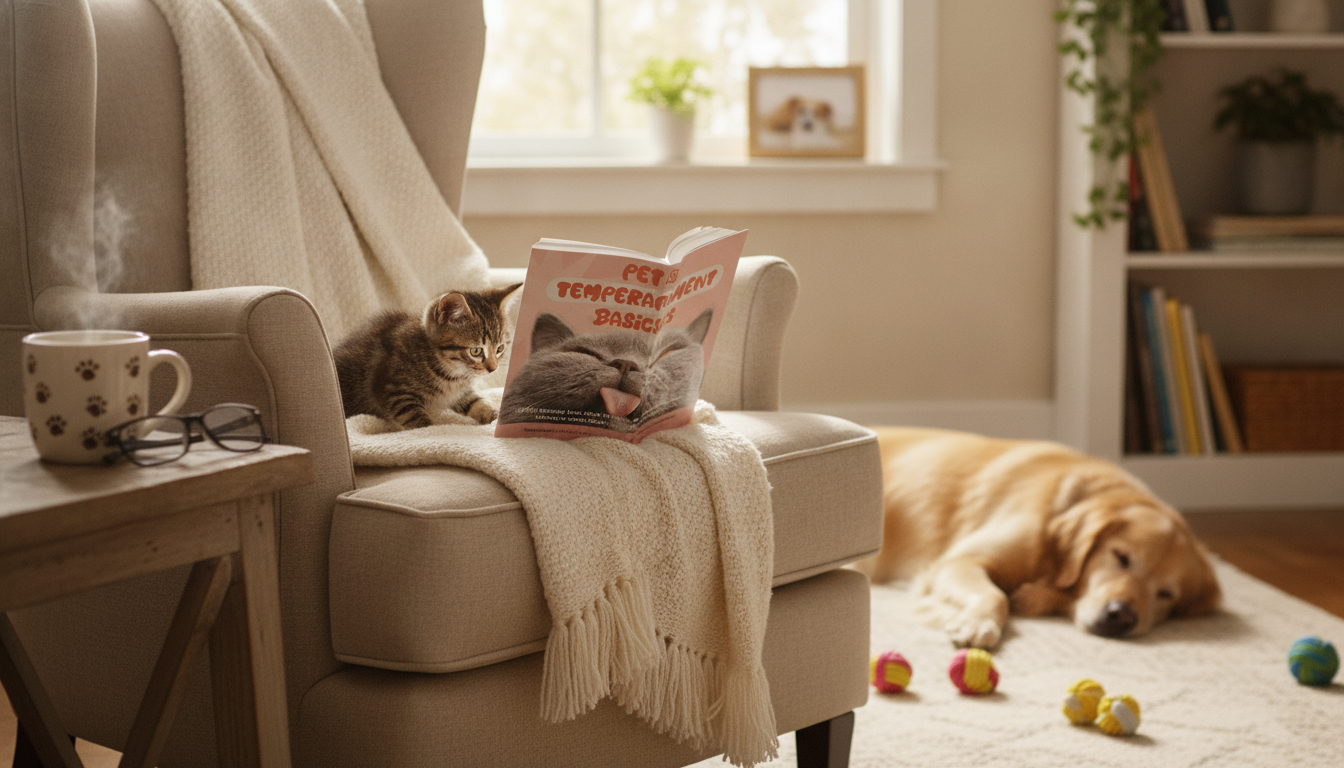
Understanding Your Pet’s Temperament (and Why It Matters Every Day)
Temperament shapes how dogs and cats handle touch, noise, new places, visitors, grooming, other pets, and everyday change. When care and training match a pet’s emotional “defaults,” you’ll typically see fewer stress behaviors, faster recovery after surprises, and more reliable learning. The goal isn’t to label a pet as “good” or “bad,” but to decode what helps them feel safe and successful—then build habits around that.
What “temperament” means for dogs and cats
Temperament describes relatively stable emotional tendencies such as sensitivity, sociability, resilience, and how quickly a pet escalates or recovers. It’s the emotional engine under the hood.
Personality is broader: favorite games, routines, preferences, and quirky habits. Behavior is what you can see in a specific moment—barking at the window, hiding under the bed, jumping on guests. Temperament influences behavior, but it doesn’t lock a pet into a single outcome. With the right setup, pets learn new coping skills and new responses.
Training works best when it fits temperament. Confident pets often benefit from clear boundaries and impulse-control work. Sensitive pets usually progress faster with gentle pacing, predictable routines, and low-pressure practice.
Core temperament traits to look for
Start by noticing patterns across situations rather than single incidents:
- Sociability: seeks interaction vs. prefers distance (and may differ with strangers vs. family).
- Confidence: explores new environments vs. hesitates; confidence can be built through gradual, positive exposure.
- Sensitivity: reacts strongly to sound, touch, or sudden movement; often thrives with calm handling and softer cues.
- Arousal level: easily revved up vs. naturally calm; high arousal commonly needs more decompression and structured outlets.
- Frustration tolerance: ability to wait, share space, or cope with barriers; improves with impulse-control games and clear rewards.
- Predatory/chase drive: common in dogs and present in cats; requires safe outlets and smart management around small animals.
Temperament signals and supportive responses
| Trait | Common signals | Helpful care and training approach |
|---|---|---|
| Confident | Loose body, relaxed face, curious sniffing/exploring | Offer choices, reinforce calm check-ins, expand environments gradually |
| Sensitive | Startles easily, wide eyes, tucked posture, quick retreat | Lower noise/handling intensity, use predictability, reward tiny steps |
| High arousal | Pacing, vocalizing, mouthing, difficulty settling | Decompression walks/play, short training bursts, teach settle and mat work |
| Low frustration tolerance | Whining, pawing, barking/meowing at barriers, grabbing | Increase success rate, teach wait, use enrichment and clear routines |
| Social but cautious | Approaches then backs away, sniff-and-retreat | Allow voluntary approach, avoid forcing contact, pair strangers with treats |
Reading body language: dogs vs. cats
Body language is the fastest way to spot stress early—before growling, swatting, or bolting.
- Dogs: watch for overall looseness vs. stiffness. A stiff body, closed mouth, hard stare, and weight shifted forward can signal discomfort before any noise happens.
- Dogs: yawning, lip-licking, turning away, and suddenly sniffing the ground can be stress signals—especially when they appear in clusters.
- Cats: tail position and movement matter. A puffed tail or thrashing tail often indicates agitation rather than friendliness.
- Cats: slow blinks and relaxed whiskers suggest comfort; flattened ears, dilated pupils, crouching, and a tense tail suggest fear or defensiveness.
- Both: freezing and sudden stillness are often a stronger warning than obvious vocalizing. If you see it, create space immediately.
For deeper species-specific visuals, the American Kennel Club’s dog body language overview (AKC — Dog body language basics) and the RSPCA’s cat guide (RSPCA — Cat body language) are useful references.
What shapes temperament over time
- Genetics and early development: breed lines in dogs and early kittenhood experiences can influence sensitivity and sociability.
- Socialization windows: gentle exposure to people, handling, sounds, and environments can reduce future fear responses.
- Health and pain: discomfort can cause irritability, avoidance, or aggression; sudden shifts deserve a vet check.
- Sleep, routine, and enrichment: under-rested pets and chaotic schedules often show higher arousal and lower frustration tolerance.
- Owner handling and reinforcement: repeated patterns (including accidental ones) can strengthen reactivity, attention-seeking, or avoidance.
For best-practice guidance on humane behavior support, see the American Veterinary Society of Animal Behavior (AVSAB) position statements.
Simple temperament check: a 7-day observation plan
Use one week to gather clear, non-judgmental data. Keep notes brief and consistent.
Care and training strategies matched to temperament
When behavior is a health or safety concern
A practical guide to decoding behavior step by step
Helpful resources (available now)
- Understanding Your Pet’s Temperament: A Complete Guide to Decoding Dog and Cat Behavior for Better Care and Training
- A Guide to Healing from Career Burnout – How to Heal from Career Burnout eBook for Professionals
FAQ
How can temperament be told apart from a training problem?
Temperament is the underlying emotional tendency (like sensitivity or resilience), while training reflects learned skills and habits. If the same emotional pattern shows up across many situations, temperament is likely involved; pain, poor sleep, and chronic stress can also mimic “stubbornness.”
What are early signs that a dog or cat is becoming stressed?
Common early signs include freezing, turning away, lip-licking, yawning, tucked posture, dilated pupils, flattened ears, and tail thrashing (especially in cats). Creating space and lowering intensity early prevents escalation.
How long does it take to change a pet’s behavior when temperament is sensitive or fearful?
Meaningful change usually takes weeks to months, measured by lower intensity reactions and faster recovery time rather than perfection. Consistent under-threshold practice helps most, and severe cases benefit from professional support.












Leave a comment