Calm Your Mind: Guided Audio Meditations for Anxiety
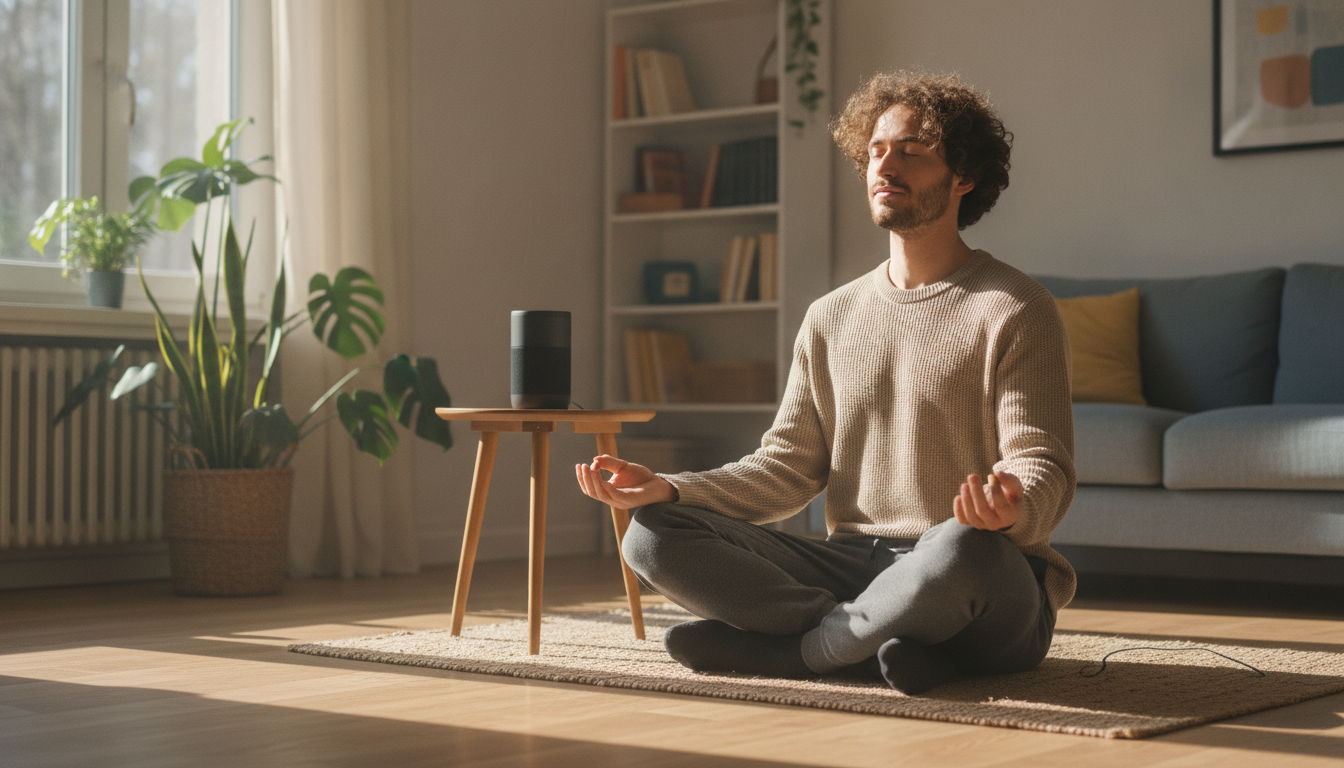
Calm Your Mind: A Guided Audio Meditation Series for Steadier Days
Racing thoughts, tension in the body, and a constant sense of being “on edge” can make even simple tasks feel heavy. A guided audio practice creates a reliable pause—one that supports slower breathing, softer muscle tension, and a more grounded response to stress. This guided meditation series is built to be easy to start, repeatable, and flexible enough to fit a morning reset, a mid-day calm break, or an evening wind-down.
Mindfulness and meditation are widely used for stress support, and research continues to explore how these practices affect attention, emotional regulation, and overall well-being. For a clear overview of effectiveness and safety considerations, see the National Center for Complementary and Integrative Health (NCCIH) and the American Psychological Association’s resources on anxiety.
What this guided series supports
A good guided track doesn’t demand a perfectly quiet mind. Instead, it gives your attention something simple to do—again and again—until the nervous system starts to recognize the pattern as safe and familiar.
- A calmer baseline by practicing short, repeatable mental “reset” cues
- Reduced reactivity by training attention to return to breath, body, or sound
- Better transitions between work, home, and sleep through structured audio prompts
- A consistent routine that can be used even when motivation is low
- A practical option for people who find silent meditation difficult
Over time, the biggest shift often isn’t “never feeling anxious.” It’s noticing the first signs sooner and returning to center faster—before the spiral gets momentum.
Who it’s best for (and when to pause)
- Good fit for beginners who want step-by-step guidance rather than open-ended practice
- Helpful for busy schedules: sessions can be used as a short break without special equipment
- Supportive for stress and anxious sensations when used consistently over time
- Not a substitute for professional care; consider extra support if anxiety is severe, worsening, or affecting safety, work, or relationships
- If panic symptoms, trauma triggers, or intense distress appear during practice, stop the session, ground in the room (name 5 things you see, feel feet on the floor), and consult a clinician if needed
Guided meditation is meant to feel supportive—not like a test you have to pass. If a particular style feels activating, it’s okay to switch tracks, shorten the session, or choose a more body-based anchor.
Inside the audio course experience
This series emphasizes clarity and repeatability—so the practice feels approachable on days when your mind is busy and your patience is thin.
- Guided structure: clear cues on where to place attention (breath, body, sounds, or a calming image)
- A pace designed for nervous-system settling: gentle reminders, pauses, and repeated anchors
- Practical language that favors simple actions (notice, soften, return) over complicated concepts
- Designed for repeat listening so the routine becomes familiar and easier to enter
Ways to use guided meditation when anxiety shows up
| Moment | What it can feel like | Suggested session goal | Small cue to try |
|---|---|---|---|
| Morning | Restless mind, anticipatory worry | Set a steady tone before decisions | One hand on chest, slow exhale longer than inhale |
| Mid-day | Tension, irritability, overthinking | Interrupt the stress loop and reset focus | Unclench jaw; drop shoulders on each exhale |
| Evening | Mental replay, “can’t switch off” | Downshift and reduce stimulation | Dim lights; soften gaze; lengthen exhale |
| Before sleep | Body tired, mind active | Ease into drowsiness without forcing sleep | Notice contact points (pillows, sheets) and count 10 slow breaths |
A simple routine that makes the practice stick
Consistency tends to beat intensity. The goal is to make starting so easy that you can do it even on low-energy days.
Pairing meditation with supportive habits
For a research-oriented overview of mindfulness for stress, the NIH News in Health offers a useful starting point.
Product details and a clear next step
If you want a guided, repeatable structure you can lean on day after day, Calm Your Mind guided meditation audio course is a digital audio course designed for steady listening—without complicated setup.
On days when motivation feels low or self-doubt is loud, pairing meditation with a confidence-building track can help. Consider adding Daily Affirmations for Abundant Wealth audio course as a supportive option for mindset and forward motion.
If stress is closely tied to work pressure and emotional fatigue, a structured reading resource can complement your audio routine. A Guide to Healing from Career Burnout eBook can be a helpful next step for rebuilding boundaries, recovery habits, and resilience.
FAQ
How quickly can guided meditation help with anxiety?
Many people notice a short-term shift during or right after a session, such as slower breathing and reduced muscle tension. Longer-term benefits usually build with consistent practice over days or weeks, as your brain learns the “return to calm” pathway more easily.
Is it better to meditate in the morning or at night?
Morning sessions can set a steadier tone before decisions and distractions begin, while night sessions can help you downshift and reduce mental replay. The best time is the one you can repeat most consistently, even if it’s only a few minutes.
What if my mind keeps racing during the session?
A racing mind is common, especially at the start. Try labeling the thought (“planning,” “worrying”), then gently return to the breath or body cue; shorter sessions and repeating the same track for a week can make the practice feel more familiar and easier to enter.











Leave a comment