Indoor Cat Enrichment: DIY Toys, Play & Home Upgrades
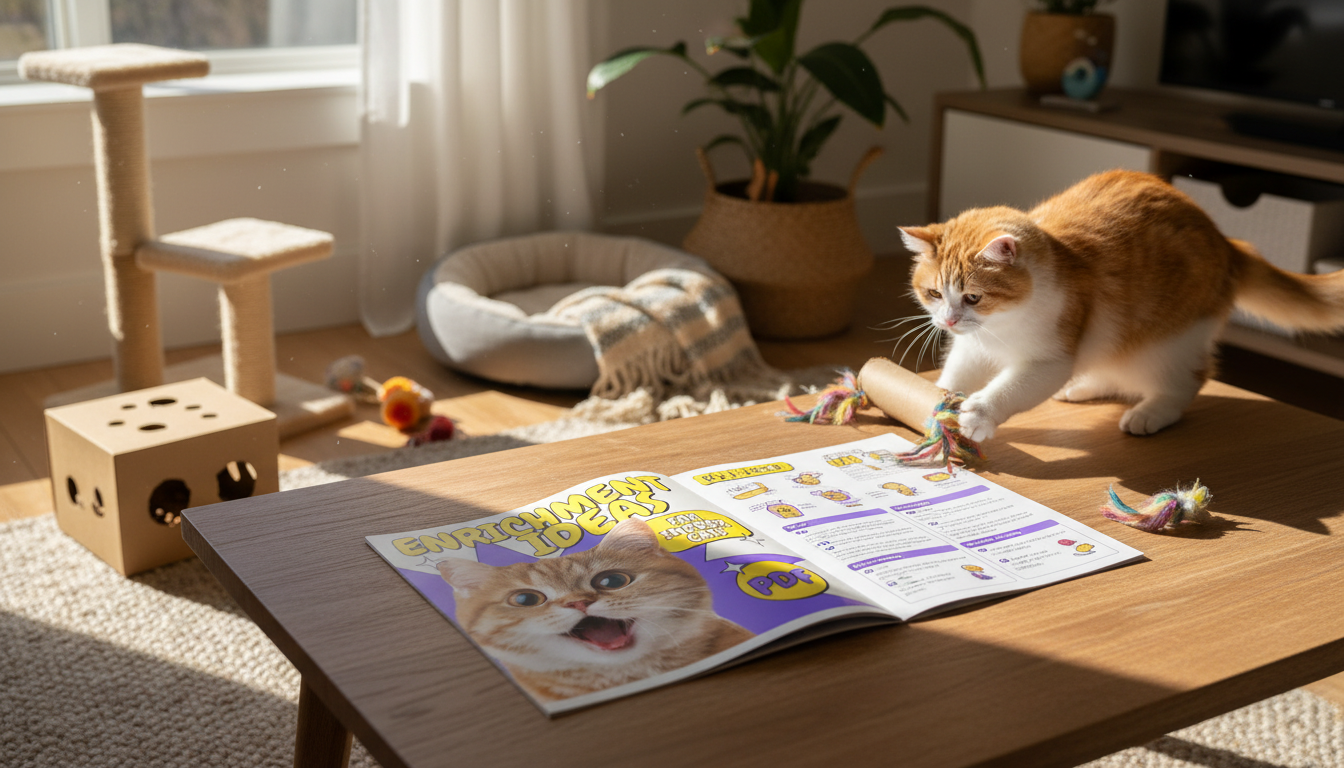
Enrichment Ideas for Indoor Cats: DIY Toys, Play Routines, and a More Cat-Friendly Home
Indoor cats can thrive when their days include hunting-style play, climbing, scratching, problem-solving, and safe novelty. A simple plan—built around short play sessions, easy DIY toys, and small home tweaks—helps prevent boredom, overgrooming, nighttime zoomies, and attention-seeking behaviors while supporting healthy weight and confidence.
Many feline behavior experts emphasize that “environment” is part of health, not a luxury. Helpful references include the AAFP and ISFM Feline Environmental Needs Guidelines and the Cornell Feline Health Center’s overview of environmental enrichment.
What counts as enrichment for indoor cats
Enrichment is anything that lets a cat express natural behaviors safely and with choice. The best setups combine physical outlets, mental challenges, and predictable routines—without forcing constant interaction.
- Physical needs: sprinting, pouncing, climbing, scratching, and safe chewing to keep muscles and joints engaged.
- Mental needs: puzzle feeding, scent games, and novelty that encourages exploration and learning.
- Natural behaviors: stalk → chase → pounce → “kill” (capture) → eat → groom → sleep; play works best when it follows this pattern.
- Choice and control: multiple resting spots, multiple routes through rooms, and the ability to opt out of interaction.
- Social enrichment: gentle, predictable interactions; some cats prefer parallel play and brief handling over extended cuddling.
Quick home upgrades that make a big difference
Small changes often beat expensive overhauls. Focus on vertical space, scratching options, and “safe retreats,” then fine-tune feeding and litter placement to reduce stress.
- Build vertical territory: a tall cat tree near a window, wall shelves (staggered like steps), or a cleared bookcase level to create safe “lookout” zones.
- Create viewing and “cat TV” spots: a sturdy perch by a window; rotate views by moving a chair or perch occasionally.
- Add scratching variety: one tall vertical post (at least shoulder height when stretched), one horizontal scratcher, and one cardboard option in separate rooms.
- Set up micro-hiding places: an open box turned on its side, a paper bag (handles removed), or a blanket-draped chair for confidence-building retreats.
- Make litter and water more enriching (and less stressful): unscented litter, at least one more box than cats, and water placed away from food; consider a fountain if the cat likes running water.
Cat-friendly home checklist (fast wins)
| Area | Simple upgrade | Why it helps |
|---|---|---|
| Vertical space | Add a tall tree or 2–3 wall steps | Reduces stress, increases movement and confidence |
| Scratching | Place scratchers near sleep spots and entrances | Encourages appropriate marking and stretching |
| Resting zones | Offer at least 3 beds/spots in different rooms | Supports choice and calm |
| Food | Use puzzle feeders 1–2 meals/day | Adds hunting and problem-solving |
| Play | Schedule 2 short sessions daily | Burns energy and reduces boredom behaviors |
DIY toys that mimic hunting (safe, cheap, and easy to rotate)
The most satisfying play resembles prey: it darts, hides, pauses, and “escapes.” DIY toys can do this surprisingly well—especially when you rotate them so they stay interesting.
Play routines that actually work (and how to avoid frustration)
Make it easier to stay consistent
If you like having a ready-to-print structure for daily play, home setup, and toy rotation, this digital download can simplify the routine: Enrichment Ideas for Indoor Cats | Printable Cat Enrichment Guide | DIY Toys, Play Routines, and Cat-Friendly Home Tips.
For households that run stressful or hectic, calmer humans often create calmer routines. If you want an owner-focused option to support consistency and stress management, consider Daily Affirmations for Abundant Wealth | Audio Course | Money Mindset & Prosperity | Abundance Manifestation as a simple background practice while you set up playtime and feeding schedules.
Food and foraging enrichment without overfeeding
Stress-reducing enrichment for timid, senior, or easily bored cats
Printable guide for daily structure and easy rotation
Use a “7-day reset” approach: pick two play styles, one puzzle-feeding option, and one home upgrade; reassess after a week and adjust. If you want an all-in-one template to print or use on a tablet, see Enrichment Ideas for Indoor Cats | Printable Cat Enrichment Guide | DIY Toys, Play Routines, and Cat-Friendly Home Tips.
FAQ
How much play does an indoor cat need each day?
Most adult indoor cats do well with at least two 5–10 minute play sessions daily, while kittens often need several short sessions and seniors may prefer gentler, shorter bouts. If your cat is restless at night, gaining weight, or pestering for attention, add a mini-session or more foraging; if they walk away or seem overstimulated, shorten sessions and focus on calmer “hunt” games.
What are safe DIY cat toys to avoid choking hazards?
Use sturdy materials like fleece strips, thick fabric, plain paper balls, and cardboard, and avoid small detachable parts that can be swallowed. Supervise string, ribbons, or feathers; remove paper-bag handles; skip rubber bands; inspect toys frequently; and store wand/string toys out of reach between sessions.
How can puzzle feeding help with boredom and weight management?
Puzzle feeding turns meals into a search-and-capture game using measured daily food, which can slow eating and add movement without adding calories. Start by putting part of your cat’s normal meal in a simple puzzle or scattered in a few small piles, then increase the challenge as they get the hang of it.










Leave a comment